

Landscape Floating Bridge Project of Shanghai Chenshan Botanical Garden
(1) Project Overview
Project Name: Chenshan Mine Pit Garden Landscape Floating Bridge
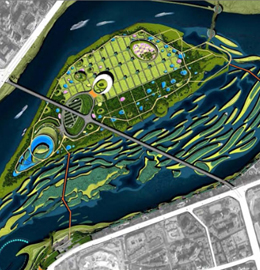
Project location: Chenshan Botanical Garden, Shanghai
Construction scale: 202 hectares
Construction unit: Guangzhou Deli Yacht Terminal Engineering Co., Ltd
Project Honor: 2012 American Society of Landscape Architects (ASLA) Landscape Design Comprehensive Honor Award;
Nomination for Best Architecture Award at the 2nd China Architecture Media Awards
(2) Project Overview
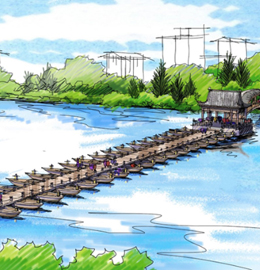
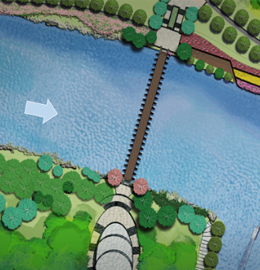
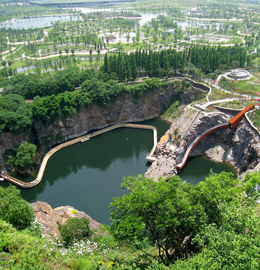
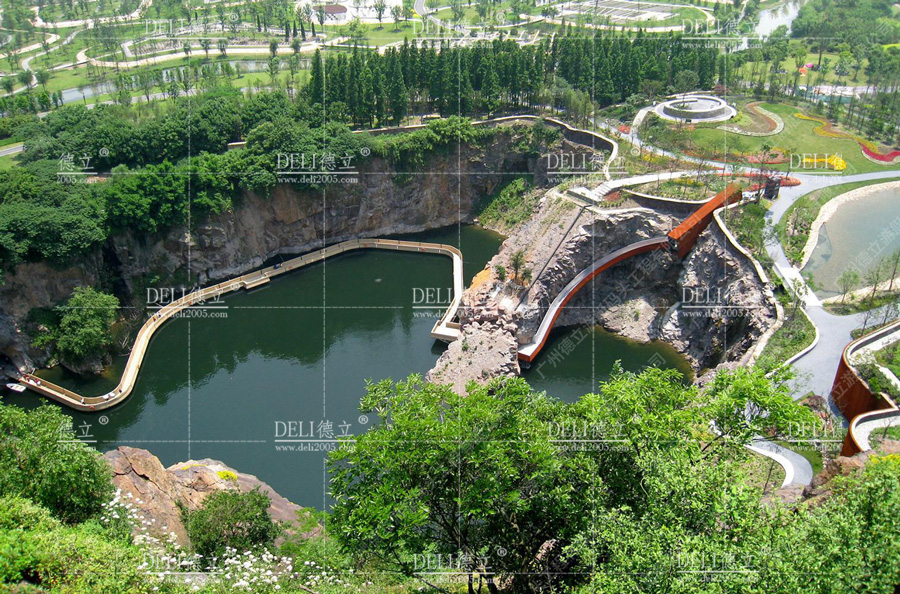
The Chenshan Mine Garden Landscape Floating Bridge is located in the northwest corner of Shanghai Botanical Garden, connected to the entire botanical garden through the Green Ring Road and the main road by the Chenshan River. The landscape floating bridge is the main passage of the mine garden, with a total length of about 160 meters and a width of 1.6 meters. The entire floating bridge adopts a modular structure, consisting of specially designed floating boxes, steel structures, and imported anti-corrosion wood panels. The floating bridge is tightly attached to a horizontal plane 30 meters below ground level, walking on it feels like walking on water. At this moment, the cliffs around me seem to be about to collapse, and the small swaying feeling of the floating bridge is unique. Standing in the middle of this sunken garden floating bridge, the cliffs are surrounded by waterfalls, and the water fir forest blocks the sunlight, making it seem like a desperate situation. After walking on the floating bridge, it was a dark cave. Walking through the cave and seeing the sun again, I couldn't help but marvel at the magic of the mine garden.
(3) Project Features
Respect the venue, minimal intervention, and maximum preservation.
Seeking a reinterpretation of these old mine landscape structures and elements to make people feel them.
Combining Eastern style thinking with post industrial design techniques.
The height and winding of the floating bridge create different spatial experiences and rich sensory experiences.
The use of materials with a sense of the times.
(4) Design philosophy and concept
In such a project, designers face many challenges. The first challenge is to restore the severely degraded ecological environment. The vegetation in the site is sparse, species are scarce, rocks are weathered, and soil erosion is severe. The second challenge is to fully explore and effectively utilize the landscape value of mining sites. Therefore, how to re-establish the appropriate connection between the mine and people has become a question that designers need to consider.
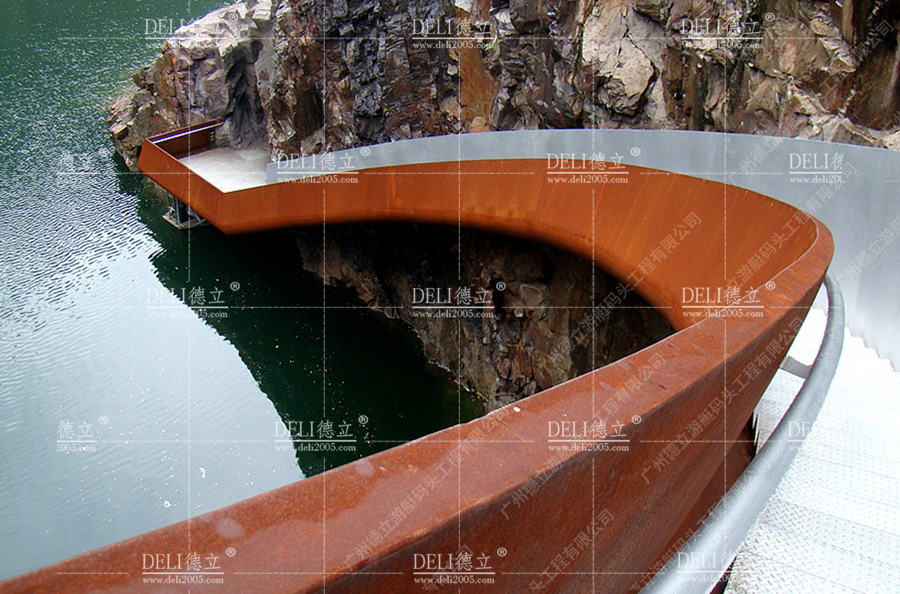
The designer chose to use both '; Addition and subtraction "; Principles for ecological restoration design in response to the special form of quarry pits: adopting the; Addition "; The strategy involves reshaping the terrain and increasing vegetation to construct new biological communities. The designer did not adopt conventional wrapping methods for the exposed mountain cliffs, but respected the authenticity of the cliff landscape. Under the premise of effective avoidance for safety reasons, the designer adopted a non intrusive approach; Subtraction "; Strategy to enable cliff walls to self repair under natural conditions such as rain and sunlight. For the remaining retaining wall at the edge of the plateau, the designer wrapped it with rust steel plate, a material with industrial marks, to form a landscape interface with rhythmic changes and light and shadow rhythms.
Under the aesthetic inspiration of Chinese landscape painting and classical literature, this project adopts modern design techniques to reinterpret the natural landscape culture of the East and the utopian ideas of China. Different from the West; Observe quietly; The way of appreciation in the East emphasizes more on the observable and playable aspects; Enter "; Experience the style of mountains and rivers. The designer sets up a place at the platform; Mirror Lake "; The beautiful curves of the mountain's reflection can be viewed from all sides, increasing the viewing angle. In order to transform the slightly dull facade of the mountain, a water tower was built leaning against the mountain, effectively adjusting its rhythm, and spring water flowed out from the mountain, adding vitality. Corresponding to the water tower, a flower viewing platform is set up at the top of the slope on the other side of Mirror Lake, where you can observe the changing mountain scenery throughout the year in the light of the water in Mirror Lake.
At the same time, on the eastern mountain wall, a mountain waterfall has been opened up, and water cascades down from the mountaintop, creating a wonderful sound of water flow when it collides with rocks. Echoing the mountain waterfall, quoting from ancient China; Peach Blossom Spring "; The artistic conception of a typical reclusive idea, breaking away from the secular world and immersing oneself in nature, is achieved by sequentially setting up steel cylinders (using the dangerous power of cliffs, imitating the blasting state during quarrying, and leading visitors into the boardwalk in a toppling posture); — Boardwalk (while walking, observe the mountain stone patterns left by quarrying, and listen to the sound of mountain waterfalls); — Yixiantian (developed from the slope of a winch left over from quarrying) is a thrilling tourist route that enters a cave through a winding floating bridge (with a platform in the middle that allows visitors to experience the beauty of mountains and waters), passes through a tunnel, and arrives at the World Garden. This tour route is both exciting and peaceful, encompassing various natural states.
On the basis of ecological restoration and cultural reshaping strategies, the potential of the site has been fully demonstrated through the most effective linking methods. A dangerous and inaccessible abandoned land has been transformed into an attractive tourist destination that allows people to get close to natural landscapes and experience the culture of quarrying industry.