Design
Integrated Architecture

Integrated Architecture
HouseIntegrated is a production method that utilizes specialized large factories and social collaboration to assemble building components and integrate them into the market, providing a final solution
A brand new building system with extremely complete products. Integrated architecture is not only the integration of building components and parts, but also the selection of optimal design solutions and advanced production management
An optimized integrated product that combines high-performance materials and equipment. The use of integrated or assembled methods in residential buildings is aimed at changing traditional construction methods and increasing construction labor
We aim to improve the industrialization level of residential production by addressing the drawbacks of high productivity, low production efficiency, and high resource consumption. Most prefabricated building systems only have the main components
Some large components are produced in the factory, and a significant portion of construction work such as indoor and outdoor decoration, water and electricity installation, and interior decoration is completed on site
The interior and exterior decoration work of the box type residential and large board residential systems can be completed in factories, but the overall industrialization level is not high. The focus of integrated architecture is on improving
High residential comfort, production efficiency, and product quality. Not only are large components produced in factories, but the vast majority of components are also processed in factories, including water
The electrical wires are also pre cut into universal accessories in the factory. At the construction site, all the components only need to be installed according to the drawings to build a residential building.
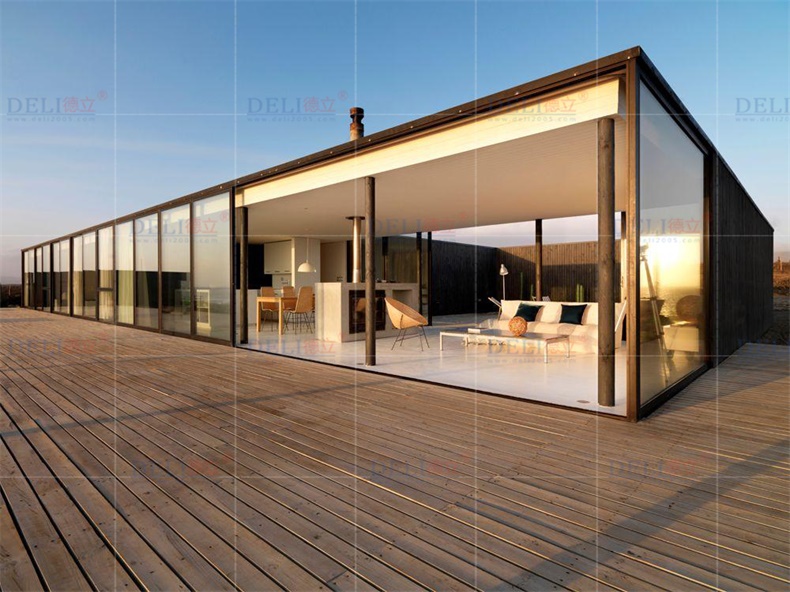
Integrated building advantages:
1. Comfort
The extensive use of new building materials such as thermal insulation materials, noise barrier, waterproof and moisture-proof, safe and non-toxic, coupled with the widespread application of new technologies and equipment, has comprehensively improved
The comfort of the residence. Safety: Manufacturing the vast majority of components in the factory is equivalent to moving the construction site to the factory. Factory production can ensure maximum product quality
Quality, coupled with reduced on-site processes, only needs to be installed according to the diagram, greatly reducing the chance of errors and ensuring safety.
2. Economy
The standardized design of integrated buildings and the use of universal components greatly shorten the construction cycle, accelerate capital turnover, save a lot of labor and management costs, and are relatively low
The comprehensive benefits of building construction are very obvious.
3. Easy to use and manage
Through an intelligent management system, achieve remote automatic billing of five meters (water, electricity, gas, heating and cooling, and sanitary hot water), remote control of household appliances and telephones, and infrared protection
Theft of systems, etc., to improve the living standards of residents; Implementing property area management, management personnel can stay at home and grasp the situation of the entire community.
4. Fashion and Personalization
Integrated houses have predictive design and constantly introduce advanced living concepts, leading the trend of residential development. To eliminate the monotony of industrialized residential production among people
Lack of personality bias, diverse layout of apartment units, serialized decoration materials and colors, providing residents with diverse choices and sufficient space to showcase their personalities.
5. Environmental sustainability
Due to the fact that most of the work on the construction site is done using dry methods, compared to traditional wet methods, pollution such as noise, dust, and construction waste is greatly reduced. Green building materials and communication
The extensive use of building components, recycling of building materials, and the variability of residential properties, even the reconstruction of entire buildings in different locations, will minimize the impact on the environment.